Frequently Asked Questions
Eggs
-
Animal welfare and the humane treatment of our hens is always our main priority at all of our farms, no matter the certification. The difference between egg types is mainly how hens are raised and what they’re fed. Different options let you choose what matters most to you.
Cage Free: Cage Free/Free Roaming laying hens have a minimum of 1.2 sq/ft per bird to move about freely inside the barn.
Free Range: Free Range laying hens are cage free birds raised in a barn that also have a minimum of two square feet of outdoor space per bird to roam freely.
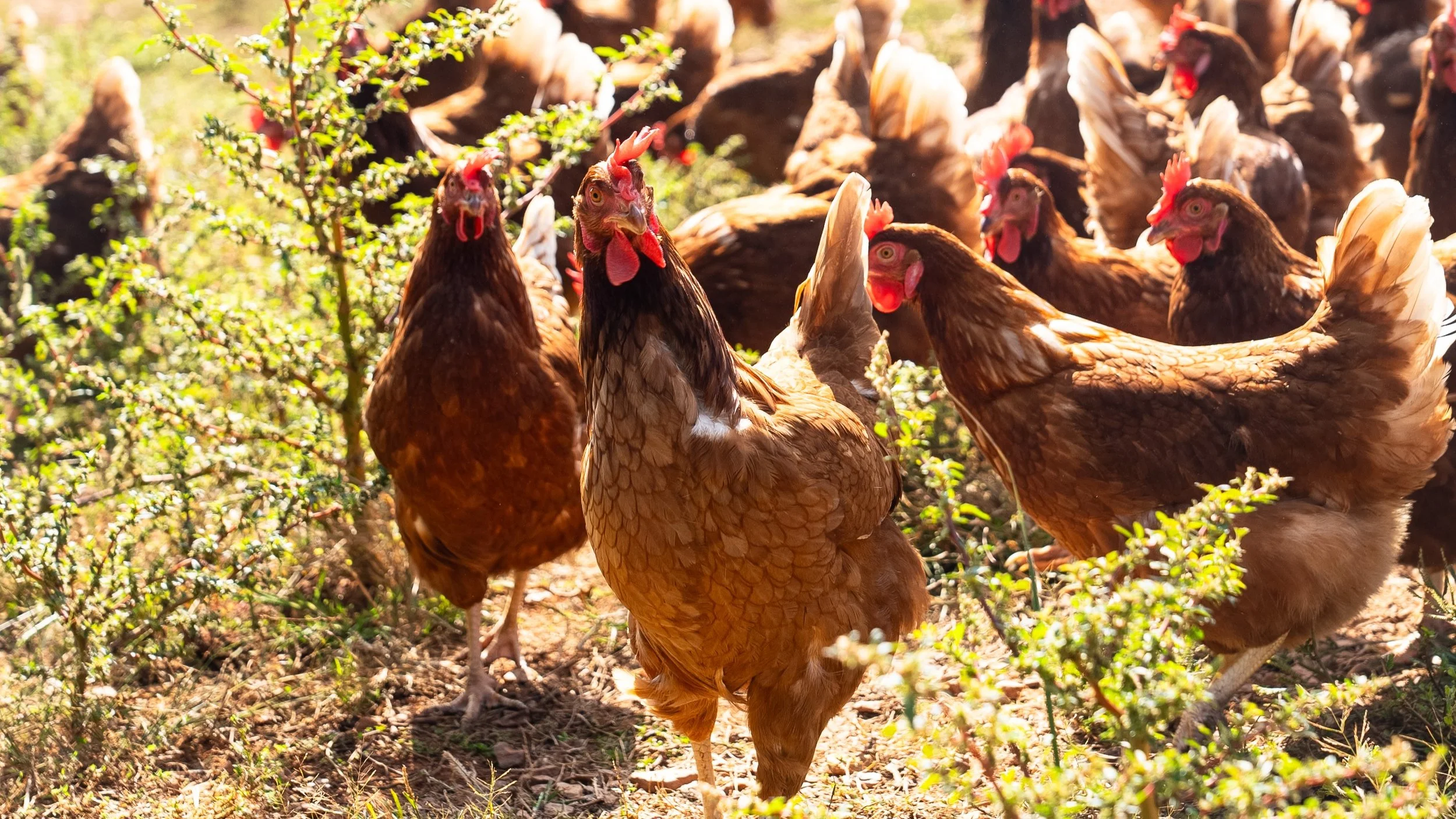
Pasture Raised laying hens are cage free birds raised in a barn that also have a minimum of 108 square feet of outdoor space per bird to roam freely.
Our Pasture Raised & Free Range farms are certified under the Humane Farm Animal Care (HFAC) standards. Our Cage Free farms are certified under the American Humane standards. All our layer farms are also certified under the United Egg Program (UEP) standards.
-
Egg sizes are determined by total carton weight per dozen. Have you seen eggs in a carton that look to be different sizes? That's why!
Medium eggs: 21 oz. per dozen
Large eggs: 24 oz. per dozen
X-Large eggs: 27 oz. per dozen
Jumbo eggs: 30 oz. per dozen, and so on.
-
Everything a hen eats including feed and foraging impacts yolk color and it is natural for it to vary. The yolk color has a lot to do with the diet of the bird. Our bird’s main diet is milled at our feed mill, here in Nashville NC. The feed can contain paprika and marigold, which along with the foraging, help the hens produce eggs with rich/deep colored yolks. Additionally, there can be seasonal influences that impact the concentration of the pigment in the birds' diet. For instance, as the grains age beyond harvest, pigmentation lessens.
-
Blood spots are caused by a blood vessel that ruptured during the formation of the egg. They are not harmful and the egg is safe to eat. As we pack our eggs, we make every effort to ensure that eggs with blood spots do not make it into the carton for the consumer. Unfortunately, even using automated methods through our process, there are instances where an affected egg makes it into the carton. If you encounter an egg with a blood spot, you can remove it with a clean utensil before cooking.
-
Pigment spots (also known as protein spots), can occur naturally in egg whites for brown-shelled eggs as brown pigment is produced in the oviduct of the hen to color the shell and is sometimes disposed early in the egg white. Usually these are browner in color, not so much red. So if you're concerned you have a blood spot, look closer, it may be possible you saw protein spot!
-
Those are called chalazae (cha-LAY-zee). They keep the yolk centered and are a sign your egg is fresh.
-
The American Egg Board! Thanks to the Egg Board, both industry professionals and curious consumers can find all the egg information they’d ever need. Visit their website here.
-
Just the shell color! It all comes down to the hen’s breed, not nutrition, taste, or quality.
FEED
-
We do not sell any bagged feed to the general public. Our feed is only produced in truckload quantities, and each batch is specific to our customers' needs. Each order is a specific feed formula curated in conjunction with an animal nutritionist to ensure each hen (or hog) is getting the best and highest nutritional meal available to them. If you are interested in becoming a feed customer and are able to meet the truckload order minimums, please contact us today to see if we are able to provide for your hen and hog feed needs at info@braswellfamilyfarms.com.
-
Most of our hen's feed is made up of corn and soybean meal. The nutritional density and composition of the feed provide the protein and energy our hens need to lay eggs regularly. Their feed is developed by an animal nutritionist and our feed specialists to ensure they receive all the nutrients they need to support their health, lifestyle, and overall well-being.
-
Not at this time.
-
Our hen feed is a wholesome, all-vegetarian feed that contains healthy grains, oilseeds and vegetable oils. Our hen feed contains no animal fat, no animal by-products, and no recycled or processed food. We never use hormones or antibiotics of any kind. Chickens can still forage to eat bugs and worms, but they are not added ingredients in any of our feed formulas.
-
Our organic pullets/hens are fed a diet comprised of organic grains and oilseeds such as corn, soy, alfalfa and canola, along with essential vitamins and minerals. These ag commodities must by grown and processed in a manner that aligns with the USDA's National Organic Program rules (no pesticides, no GMOs, for example). This is their main source of feed. Being organic, the birds are given access to the entire barn 24/7 and are also given access to the outdoors – this is where they can forage outdoors.
Nutrition
-
No, they do not! Decades of research show eggs can be enjoyed as part of a heart-healthy diet. More than 40 years of research has demonstrated that people can enjoy eggs without impacting risk of heart disease. The 2015 Dietary Guidelines for Americans does not list dietary cholesterol as a nutrient of public health concern. New data show that egg consumption may have a positive impact on HDL-cholesterol function, which builds on the evidence demonstrating egg consumption is not associated with cardiovascular disease.
-
Yes! Thanks to their protein, eggs help keep you feeling full longer, so you’re less likely to go hunting for snacks later.
-
Choline supports brain health and development, especially important during pregnancy. Eggs are one of the richest natural sources.
-
Just a little; the pigment in the yolk can provide a small, specific nutritional benefit, but it does not change the core nutritional value of the egg. Yolk color can vary based on feed ingredients or what a hen is foraging. Ingredients like paprika or marigold cause a deeper and richer yolk color. Some hens are picky eaters and will avoid those ingredient which could cause a paler yolk in a carton of eggs with deeper yolk colors.
-
Look at its earlobe. Yes, chickens have earlobes! A chicken with a whitish earlobe lay white eggs. A chicken with reddish-brown earlobes will lay brown eggs.
-
Today, a standard large egg contains approximately 185mg of cholesterol, on average. Eggland’s Best eggs, which contain less cholesterol than standard eggs, allow even those with dietary cholesterol issues to consume up to 12 eggs per week. The FDA announced in December 2024 that eggs now meet the agency’s updated definition of “healthy” food, aligning with current nutrition science and dietary guidelines.
-
Eggs are a nutrient dense food and with 12 servings per dozen eggs they are great alone or used as a nutritious ingredient in baking or other prepared foods.
-
You bet they are! Nicknamed "nature's perfect protein" eggs provide all nine essential amino acids. Complete with high-quality protein, vitamins, and minerals to support your heart, brain, eyes and more! They are an egg-cellent source of vitamin B12, biotin (B7), iodine, selenium, and choline. Also providing 6 grams of protein, riboflavin (B2), pantothenic acid (B5), carotenoids lutein and zeaxanthin, all in 70 calories. That’s what we call an eggs-tremely great value.
-
Both! Egg whites contain most of the protein in the egg. And the yolk holds most of the egg’s other nutrients with nearly half the protein, plus healthy fats your body needs.
Hen Care
-
We get our birds at 1 day old. They are immediately put on specific feed plans to ensure they have the best nutrition to remain healthy and produce high-quality eggs. Hens will begin laying eggs around 18-19 weeks of age.
-
A hen will typically produce one egg every 24 to 26 hours and lay about 300 eggs per year. As a hen ages, her shell quality goes down, making for more broken eggs.
-
A: Certified Humane® is a third-party animal welfare organization that certifies our free range and pasture raised egg practices. Certified Humane® standards are set by a committee of animal scientists and veterinarians who are experts in the species they are inspecting. The benefit for shoppers is that they can buy our eggs with confidence that the birds are raised to the standard provided by Certified Humane. Read more about Certified Humane® standards on their website.
-
A: American Humane Society’s Farm certifies our cage free egg types. Their program evaluates the humane treatment of farm animals through independent third-party audits. Guided by rigorous science-based welfare standards, the certification helps support the industry's ethical and transparent food production standards. Read more about American Humane Certified™ standards on their website.
-
Bird Flu/HPAI is a virus with high mortality rates that occur in birds. Laying hens can contract HPAI when the local or migratory wild fowl passes over farm areas and leaves droppings containing the virus. HPAI cases typically occur in the spring and fall when wild bird migration is most active, but local cases continue to be reported extending risk throughout all seasons. This has caused farmers across the country to be extra vigilant and increase their biosecurity protocols to further protect our hens and employees.
-
Biosecurity is a set of management practices, physical designs, and operational protocols used to stop diseases and germs from entering, spreading inside, or leaving a farm. Key steps include limiting visitors, cleaning equipment, controlling pests, and keeping coops dry and secure. It's used to prevent infectious diseases, viruses, and bacteria (such as Salmonella) from entering poultry farms, infecting laying hens, and contaminating the egg supply. It also protects laying hens from viruses, bacteria, and pests.
-
Thank you for your interest in our hens! Our pasture raised farms are located in both North Carolina and Virginia, however we do not disclose their specific locations for various animal welfare and biosecurity reasons. But if you'd like to see our beautiful hens, they are featured on our social media! All the chickens you see on our social pages are images and videos taken from our farms. You can also find recipes, egg and chicken facts, community involvement, and all things Braswell Family Farms on our social pages. Check them out at:
Other
-
A: You can purchase our eggs at a grocery retailer near you! Check out our store locator page to find a retailer near you. We produce our own egg brand, Natural Choice, as well as Eggland's Best, Land O Lakes and other private label brands.
-
Eggs are best stored on the bottom shelf of your refrigerator (not the door) in a covered carton at 38 to 40 degrees F°. For every hour that an egg sits at room temperature, it ages the equivalent of an entire day. Eggs stored properly should remain safe to eat for up to 4-5 weeks.
-
Thank you so much for your interest in our operations. Due to our biosecurity protocols, we do not offer tours to the public. Because we are an in-line facility, our plant is also the home of our primary egg-laying complex and it allows too much risk to allow outside visitors. However, we were featured on a TV special called Where the Food Comes From. I'm linking the episodes below so you can watch and hopefully still enjoy the inside scoop of our operations.
-
In 2023, Braswell Family Farms hosted the 1st annual New Year's Eve celebration in Nashville, NC. The Braswell Family Farms NYE Egg Drop is a free community event featuring live music, family-friendly activities, food and drink vendors, a 10-foot egg lowered from a crane with a "new year" countdown, and a fireworks display. The best part? It's early in the evening (4pm-8pm) making it easy for folks and families of all ages to attend and return home safely. It's been a successful event each year and is becoming a staple activity to look forward to in the community.
-
We love adding to our flock! First we need to make sure this partnership would be a great fit. Email us at info@braswellfamilyfarms.com with your information and we will follow up with you.
-
Great question! You can visit our careers page. Instructions to apply depend on the position, so be sure to click "Read More" under the position summary to view the application details.