
Egg in a Bottle
Can you get an egg inside a bottle without pushing it? With a little science, you can make an egg appear to squeeze itself through a bottle opening!
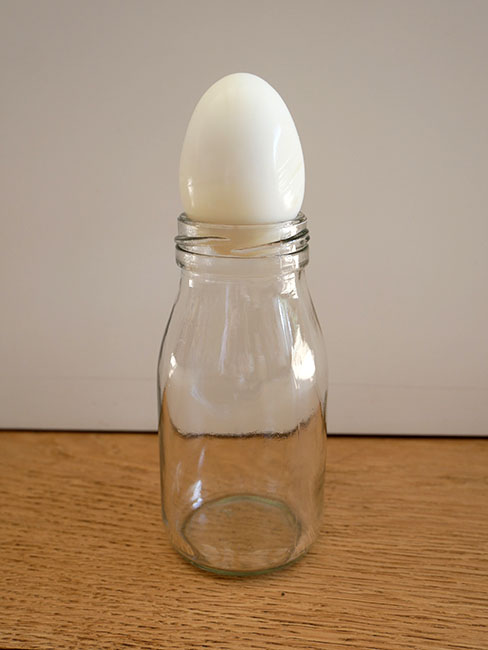
Ingredients
1 hard-boiled egg, peeled
1 sturdy, heat-safe glass bottle with an opening slightly smaller than the egg
Hot water
Matches (for the alternative method)
Heat-resistant gloves or oven mitts
Towel
Directions
Method 1: Hot Water
Start with a peeled, hard-boiled egg and a sturdy, heat-safe glass bottle with an opening slightly smaller than the egg.
Have an adult carefully pour hot water into the bottle to warm the glass and air inside.
Let the water sit for approximately one minute.
Using heat-resistant gloves or oven mitts, have an adult carefully empty the water and immediately place the bottle upright on a stable, heat-resistant surface.
Quickly position the peeled egg over the bottle's opening, with its narrower end pointing downward.
Watch as the air inside cools and the egg is pushed through the narrow opening into the bottle!
Method 2: Matches (Adult Demonstration Only)
Start with a peeled, hard-boiled egg and a sturdy, heat-safe glass bottle with an opening slightly smaller than the egg.
Have an adult light a few matches and carefully drop them into the bottle.
Immediately place the peeled egg over the bottle's opening.
Watch as the flames go out, the air inside cools, and the egg is pushed through the opening into the bottle!
Safety First: Both methods require adult supervision. The hot-water method involves hot glass and potential burns. The match method involves an open flame and should only be performed by an adult in a suitable fire-safe setting. Never use a sealed container, and avoid sudden temperature changes that could crack the glass.
The Science Behind It
How does an egg fit through an opening smaller than itself? It's all about air pressure!
When the air inside the bottle heats up, some of it escapes. As the remaining air cools, the pressure inside the bottle decreases.
This creates a difference in air pressure between the inside and outside of the bottle. The higher air pressure outside pushes the flexible egg through the narrow opening and into the bottle.
It might look like the bottle is sucking the egg inside, but it's actually the surrounding air doing the work!