
The Floating Egg
Can you make an egg float? Put your egg to the test with this fun experiment that explores how different liquids affect whether an egg sinks or swims!
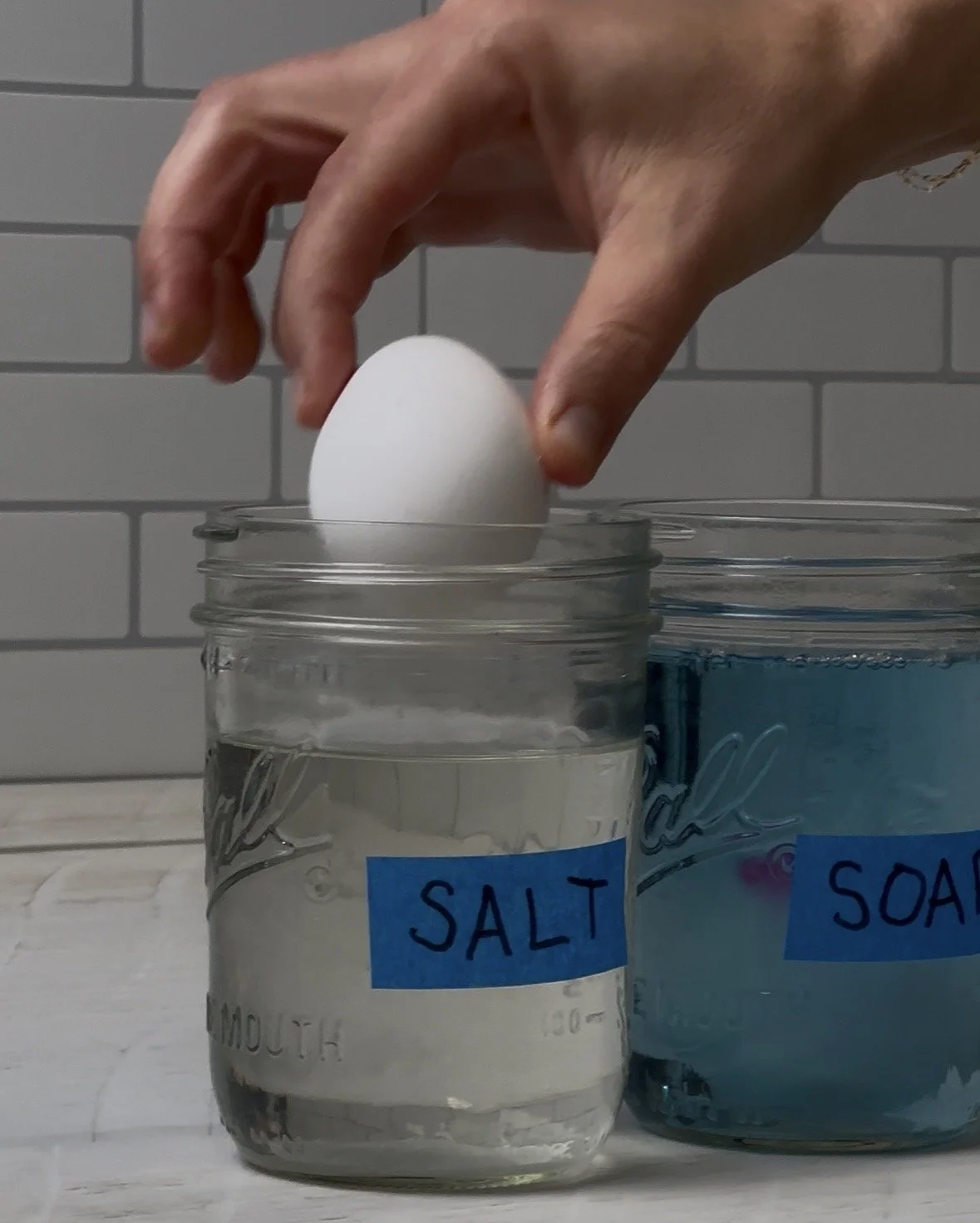
Ingredients
5 raw eggs
5 clear glasses or containers
Tap water
Table salt
Granulated sugar
Liquid dish soap
Light corn syrup
Cooking oil
Directions
Arrange five clear glasses on a flat surface. Prepare each glass with the following mixtures:
Glass 1: 1 cup of plain tap water
Glass 2: 1 cup of water mixed with 4 tablespoons of salt
Glass 3: 1 cup of water mixed with 4 tablespoons of sugar
Glass 4: 1 cup of water mixed with 1 tablespoon of dish soap
Glass 5: 1 cup of cooking oil
Stir the salt and sugar mixtures until dissolved.
Before adding the eggs, make a prediction! Which liquids will make an egg float?
Carefully lower one raw egg into each glass.
Observe whether each egg floats, sinks, or stays suspended in the liquid.
Compare your results. Did any of the liquids surprise you?
The Science Behind It
It's all about density! An egg sinks when it's denser than the liquid surrounding it and floats when the liquid is denser than the egg.
Adding salt or sugar increases the density of water, which can help an egg float. Cooking oil is typically less dense than a fresh egg, so the egg will usually sink. A small amount of dish soap may change the water's properties, but it generally won't increase its density enough to make a fresh egg float.